From Screen Fatigue to Sweet Dreams: How E-Readers Gave My Nights Back
You know that restless feeling—lying in bed, scrolling endlessly, your eyes straining against the glow of your phone? I was there too, caught in the cycle of late-night swiping, until I discovered something surprisingly simple: swapping screens for an e-reader changed everything. It wasn’t just about reading more—it was about sleeping better, feeling calmer, and reclaiming a quiet moment just for myself. What if the key to a peaceful night wasn’t another app, but stepping away from the ones we’re addicted to? That small shift didn’t just improve my sleep—it softened the edges of my days, too.
The Nighttime Trap: How Phones Steal Our Sleep Without Us Noticing
We’ve all done it. The day ends, you finally sink into bed, and without even thinking, your hand reaches for your phone. It starts innocently—just one quick check. Did I reply to that text? What’s the weather tomorrow? Did anything important happen while I was making dinner? But before you know it, 10 minutes have slipped away. Then 20. Then 45. Suddenly, it’s midnight, and you’re not even sleepy—your mind is buzzing with videos, headlines, and random thoughts sparked by someone else’s life online.
Here’s what’s really happening: that soft, bright glow from your phone is doing more than keeping your eyes open—it’s interfering with your body’s natural rhythm. Your brain interprets that blue light as daylight, which tells your system to stop producing melatonin, the hormone that helps you fall asleep. So even if you’re physically tired, your body is being tricked into thinking it’s still time to be alert. It’s like trying to wind down while standing under a streetlamp.
And it’s not just the light. The content itself keeps your mind active. Every notification, every new post, every comment thread is designed to grab your attention and keep you engaged. You’re not relaxing—you’re being pulled into a loop of mental stimulation. The more you scroll, the more your brain stays in ‘on’ mode. I used to lie there, exhausted but wide awake, wondering why I couldn’t just shut off. I wasn’t lazy. I wasn’t broken. I was just caught in a cycle that millions of us fall into every single night.
The emotional toll is real, too. When you don’t sleep well, everything feels harder. Mornings become a struggle. You’re more irritable with your kids, less patient with your partner, and quicker to feel overwhelmed. That quiet time you hoped to have for yourself? It gets replaced by digital noise. And the sad truth is, most of what we scroll through doesn’t even bring us joy—it just fills the silence. I started realizing that my bedtime habit wasn’t helping me unwind. It was stealing my peace, one tap at a time.
A Quiet Rebellion: Discovering the E-Reader as a Sleep Sanctuary
My wake-up call came after a particularly rough week. I was dragging through each day, relying on coffee by 10 a.m., and snapping at small things—like mismatched socks or a sink full of dishes. One evening, my sister looked at me and said, “When was the last time you just… read a book before bed?” I laughed. Books? I didn’t have time. But she insisted. “Try it. Not on your phone. On a real book—or one of those e-readers. You know, the ones that look like paper?”
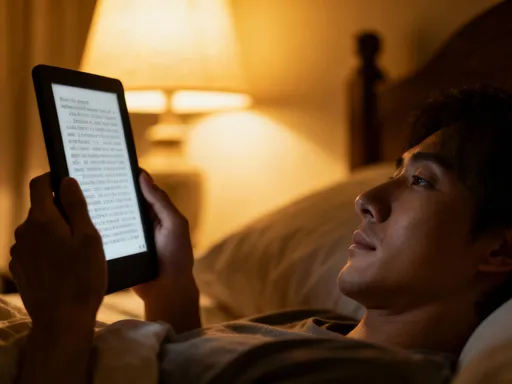
Skeptical but desperate, I ordered a basic e-reader. No frills. Just something small and light. When it arrived, I charged it, set my phone to charge across the room, and climbed into bed with this little device. I opened a novel I’d been meaning to read for months. And something shifted.
The screen didn’t glow. It was soft, like pages under a lamp. There were no pings, no banners, no red dots demanding my attention. Just words. I read for 20 minutes, and when I closed it, I didn’t feel wired. I felt… calm. Like my mind had been gently guided back to stillness. That night, I fell asleep faster than I had in years. No tossing. No mental replay of the day. Just a quiet descent into rest.
It wasn’t magic. It was design. This little device wasn’t built to keep me hooked. It was built to let me disconnect. And in that simplicity, I found freedom. It wasn’t about giving up technology—it was about choosing a different kind of tech. One that didn’t demand my attention but quietly supported my well-being. That first night felt like a small rebellion against the constant buzz of modern life. And honestly? I wanted more of it.
Why E-Readers Work: The Gentle Tech That Respects Your Nights
So what makes an e-reader so different from a phone or tablet? It all comes down to the screen. Most e-readers use something called e-ink technology. You won’t hear engineers raving about its processing speed or graphics—it’s not flashy. But that’s the point. E-ink mimics the look of real paper. It reflects light instead of emitting it, so your eyes don’t get that harsh, direct exposure. Think of it like reading a book under a soft reading lamp, rather than staring into a flashlight.
And if your eyes are sensitive, many models now come with a warm light option. You can adjust the tone from cool to warm, like shifting from midday sun to candlelight. This is especially helpful in the evening, when your body is already preparing for sleep. The screen doesn’t disrupt your natural rhythms the way a phone does. In fact, studies have shown that reading on e-ink devices has a much smaller impact on melatonin levels than using backlit screens. That means your body can transition into sleep mode more naturally.
But it’s not just about the screen. It’s about what’s missing. No email. No social media. No games. No endless videos. An e-reader does one thing well: it lets you read. There’s no temptation to ‘just check’ something else. The design itself creates a boundary. When you pick it up, your brain starts to associate it with calm, focus, and disconnection. It’s like training your mind to wind down the moment you hold it.
I remember the first time I left my phone in another room and reached for my e-reader instead. I felt a little uneasy at first—like I was missing out. But within minutes, that feeling faded. Instead of feeling cut off, I felt protected. This little device wasn’t stealing my time. It was giving it back. And the more I used it, the more I realized that simplicity isn’t boring. It’s peaceful. It’s powerful. It’s exactly what my nights had been missing.
Building a Better Bedtime Ritual: How to Replace Scrolling with Reading
Changing a habit doesn’t happen overnight—especially one as deeply wired as bedtime scrolling. I didn’t go from 45-minute phone sessions to an hour of reading in a single night. It took intention, a few small tweaks, and a lot of self-compassion. But the good news? You don’t have to be perfect. You just have to start.
The first thing I did was create a new routine. I started charging my phone in the kitchen, not on my nightstand. That small change made a big difference. Out of sight, out of mind. Then, I placed my e-reader right on my pillow each evening after dinner—like a quiet invitation. Seeing it there reminded me of the kind of night I wanted: calm, slow, mine.
I also started small. Instead of aiming for an hour of reading, I committed to just 10 or 15 minutes. That felt doable, even on tired nights. And if I wasn’t in the mood for a novel, I’d read a chapter from a memoir or a self-help book. The key was consistency, not length. Over time, those minutes added up. I began looking forward to that time, not as a chore, but as a gift.
Another helpful trick? Keeping a list of books I wanted to read. Sometimes, the hardest part isn’t reading—it’s deciding what to read. I made a simple list on my e-reader’s notes feature: titles that intrigued me, recommendations from friends, books I’d meant to read for years. Having that list made it easier to jump in. And when I came across a word I didn’t know, I’d tap it—the built-in dictionary gave me the meaning in seconds. That little feature kept me engaged and curious, not frustrated.
I also started pairing reading with other calming habits. A warm cup of herbal tea. Five deep breaths before I opened the book. Sometimes, I’d play soft instrumental music in the background—just enough to fill the silence without distracting me. These small rituals helped signal to my body: it’s time to slow down. You’re safe. You can rest now.
Beyond Sleep: The Unexpected Gifts of a Reading Habit
Of course, better sleep was the first and most obvious benefit. I started waking up feeling more refreshed, more present. But what surprised me were the other changes—subtle, but meaningful. My focus improved. I could concentrate longer during the day, whether I was working, cooking, or helping my kids with homework. I felt less scattered, less reactive.
Reading also became a form of emotional nourishment. There’s something deeply comforting about losing yourself in a story—about stepping into someone else’s world, even for a few pages. I found myself more empathetic, more patient. When I read about characters facing challenges, I started reflecting on my own life with more kindness. It wasn’t therapy, but it felt therapeutic.
I also rediscovered a love for learning. I’d always meant to read more personal growth books—about mindfulness, gratitude, or building better habits—but I never made time. Now, with my nightly reading, I finally did. I read about women who rebuilt their lives after loss, about finding joy in small things, about creating space for yourself in a busy world. These weren’t just books. They were quiet conversations with wiser versions of myself.
And the more I read, the more I noticed a shift in how I saw my time. That hour I used to spend scrolling? I now saw it as sacred. A time to recharge, reflect, and reconnect with what matters. I wasn’t just avoiding screens—I was choosing presence. I wasn’t just reading. I was caring for myself in a way I hadn’t in years.
Making It Stick: Overcoming Obstacles and Staying Consistent
Let’s be real—there were nights I forgot my e-reader. Nights I was so tired I just wanted to close my eyes, no matter what. Nights when I missed the quick dopamine hit of a funny video or a juicy update. Change isn’t linear. Some nights, I’d reach for my phone without thinking. And that’s okay.
The key was not to judge myself. I learned to treat setbacks like weather—passing clouds, not storms. If I slipped back into scrolling, I’d gently remind myself why I started. No guilt. No shame. Just a quiet return to my intention. And the next night, I’d try again.
One thing that helped was keeping my e-reader charged and visible. I didn’t tuck it away in a drawer. I left it on my nightstand, like a bookmark for my better habits. And when I was tired, I’d choose lighter, more engaging books—something with a strong story, not a dense textbook. The goal wasn’t to impress anyone. It was to enjoy the experience.
I also reminded myself that this wasn’t about perfection. It was about progress. Even 10 minutes of reading was better than 30 minutes of scrolling. Even three nights a week made a difference. Over time, the habit became easier. My brain started craving the calm instead of the chaos. And honestly? I began to miss the quiet if I didn’t have it.
Reclaiming the Night: How Small Tech Choices Lead to Big Life Shifts
Looking back, switching to an e-reader wasn’t just about better sleep. It was about reclaiming my nights—and in turn, my days. It was a small decision, but it rippled through my life in ways I never expected. I’m more patient. More present. More like myself.
In a world that pulls us in a hundred directions, that little device became an anchor. It reminded me that I get to choose how I spend my time, even in the quietest hours. Technology doesn’t have to drain us. It can support us. It can protect our peace, if we choose the right tools.
What started as a simple swap—phone for e-reader—became a quiet act of self-respect. It said: my rest matters. My calm matters. My time matters. And that mindset has spilled into other parts of my life. I’m more intentional about how I use my phone during the day. I’m more protective of my energy. I’m learning to say no to things that drain me and yes to things that fill me up.
If you’re lying in bed right now, scrolling, feeling restless, know this: you’re not alone. And you don’t have to stay stuck. You don’t need a complicated routine or a complete digital detox. You just need one small change. One device. One quiet moment. Because sometimes, the most powerful shifts begin not with a grand gesture, but with a single, gentle choice. Pick up a book. Turn off the glow. Let your mind rest. Your nights—and your self—are worth it.