Tired of Feeling Left Out in Online Learning Groups? This Changed Everything
Starting a new course online used to feel lonely—just me, a screen, and a long list of unread messages in a group chat I didn’t understand. I’d scroll past posts, too unsure to comment. But one small shift changed how I connected, contributed, and actually enjoyed learning with others. It wasn’t about being the smartest—it was about finding my rhythm. What if you could walk into any learning community and feel at ease, like you truly belong? That’s exactly what happened when I stopped trying to fit in and started using tech in a way that fit me.
The Awkward Beginning: When Learning Feels Isolating
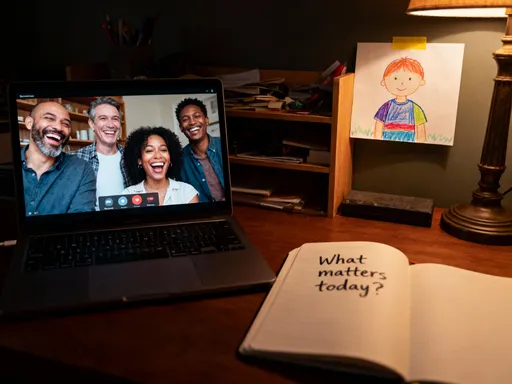
Remember that first day of a new online course? You log in full of hope, maybe even excitement. You’ve picked something meaningful—maybe a new skill to grow your side hustle, or a class to finally understand personal finance, or even just a creative outlet to reconnect with yourself. But then you open the group discussion board and freeze. A flood of messages already fills the screen—inside jokes, quick replies, references to things you haven’t seen yet. Someone says, “As we discussed yesterday…” and you think, Wait, what yesterday? I just got here. That knot in your stomach tightens. You’re not behind in the material, but you already feel behind in belonging.
It’s not just you. So many of us—especially women juggling home, family, and personal growth—experience this quiet kind of loneliness in digital learning spaces. You’re not shy. You’re not uninterested. You just don’t know how to jump into a conversation that feels like it started without you. And the fear sneaks in: What if I ask a question everyone else already knows the answer to? What if I sound confused? What if I type something and no one responds? That silence starts to feel like failure, even when you’re showing up and doing the work.
I remember one course on mindful parenting where I didn’t say a word for two full weeks. I watched others share their reflections, quote the instructor, tag each other in replies. I read every message, took notes, did the exercises—but I stayed invisible. Not because I had nothing to say, but because the format felt like a fast-moving train, and I kept missing the platform. The truth is, traditional online groups often reward the quick, the confident, the always-online. But real learning—especially for adults with full lives—doesn’t happen on someone else’s schedule.
Discovering the Power of Small Contributions
The moment everything shifted wasn’t dramatic. No spotlight. No big reveal. It was the day I stopped waiting to have the “perfect” thing to say and just reacted to someone’s post with a simple heart emoji. That’s it. One tap. But that tiny action changed how I felt. I wasn’t just consuming content—I was part of the conversation. And guess what? The world didn’t end. No one judged me. In fact, the person replied with, “Thanks for that—it means a lot.” And suddenly, I wasn’t just reading their words. I was connected to them.
That small gesture opened a door. The next day, I asked a question—just one. “I’m still wrapping my head around the lesson on boundaries. Can anyone share how they’ve applied this at home?” I hit send and walked away, half-expecting silence. But within hours, three people responded. One said, “I was wondering the same thing!” Another shared a short story about setting limits with her teenage daughter. That exchange didn’t make me an expert, but it made me feel seen. And more importantly, it reminded me that learning isn’t about knowing everything—it’s about being willing to grow, together.
Modern learning platforms are finally catching on. They’re not just spaces for debates or timed discussions anymore. They’re designed with quieter voices in mind. Think about reaction buttons—like hearts, thumbs-up, or “aha!” icons. These aren’t just cute features. They’re entry points for people who aren’t ready to write paragraphs. Anonymous polls let you share your opinion without fear of judgment. Optional discussion threads mean you can dive deep when you want to, but skip the noise when life is loud. The beauty is in the flexibility: you get to choose how you show up. You don’t have to be the loudest to be valued.
Technology That Adapts to You, Not the Other Way Around
Here’s the thing we often forget: technology should serve our lives, not the other way around. Yet so many of us have been trained to think that if we’re not responding instantly, typing fast, or keeping up with every message, we’re failing. But what if the problem isn’t us—it’s the expectation? The good news is, today’s best learning tools are built to adapt to real human rhythms, not robotic ones.
Take asynchronous discussions. Instead of live chats that demand your attention at a specific time, these let you read and reply on your own schedule. That means you can engage after bedtime stories, during your lunch break, or even while folding laundry. No more missing out because you’re parenting, working, or simply needing a quiet moment. You’re not late—you’re present, in your own way.
Then there are voice notes. I can’t tell you how much easier it is to tap a button and speak my thoughts than to sit and type a polished paragraph. I’ll record a quick reflection while walking the dog or driving to pick up the kids. It feels more natural, more authentic. And for non-native English speakers or those with typing challenges, voice notes are a game-changer. They let your personality come through—the warmth in your voice, the pause as you think—without the pressure of perfect grammar.
And let’s talk about AI-powered summaries. Some platforms now offer smart digests that pull key points from long discussion threads. Imagine logging in and seeing a two-sentence recap of everything important that happened while you were offline. No more scrolling for 20 minutes trying to catch up. These tools don’t replace participation—they make it possible. They clear the clutter so you can focus on what matters: connecting, learning, and growing at your own pace.
Building Confidence Through Consistent, Low-Stakes Interaction
Confidence isn’t something you wake up with. It’s something you build—one small moment at a time. And in online learning, that growth happens through consistent, low-pressure interaction. Think of it like strength training for your voice. You don’t start by lifting heavy. You begin with light weights, proper form, and repetition. Over time, your muscles grow. The same is true for participation.
When I started using those small actions—reacting, asking one question, sharing a brief thought—I wasn’t trying to become the most active member. I was just showing up. But something powerful happened: people started recognizing my name. Not because I was speaking the most, but because I was showing up regularly. One woman messaged me privately and said, “I always appreciate your questions—they help me slow down and really think.” That message stayed with me. It reminded me that my voice had value, even when it was quiet.
Many courses now include weekly reflection prompts or peer feedback exchanges. These aren’t graded. They’re invitations. And they work because they’re predictable. You know every Sunday there will be a prompt like, “What’s one thing you’re trying this week?” or “Share a win, big or small.” That consistency removes the mental load of wondering, What should I say? When should I say it? Instead, it becomes a rhythm—like journaling, but with community.
And here’s the secret: positive reinforcement fuels this cycle. When someone replies with “I relate to that” or “Thank you for sharing,” it’s like a little spark. It tells your brain, You belong here. Your words matter. Over time, those sparks add up. You start replying without overthinking. You share a story you once would’ve kept to yourself. You realize you’re not just learning the course material—you’re learning to trust your own voice.
The Ripple Effect: How Your Voice Helps Others Feel Seen
One of the most beautiful things about learning in community is how one person’s courage can lift up everyone else. I’ll never forget the day I admitted I was struggling with the course’s pacing. I wrote, “I love this content, but I’m behind. Life got busy, and I’m trying to catch up without beating myself up.” I almost deleted it. It felt vulnerable. But I hit send anyway.
Within minutes, replies poured in. “Same here.” “Thank you for saying that.” “I was too scared to admit it, but I’m behind too.” One woman wrote, “I thought I was the only one juggling everything and still trying to grow. This helps me feel less alone.” That moment changed the tone of the whole group. People started sharing their own challenges—kids getting sick, work deadlines, personal setbacks. The conversation deepened. We weren’t just learning the material—we were learning how to be human together.
That’s the ripple effect. When you share your real experience—your confusion, your pace, your imperfections—you give others permission to do the same. And modern tools make this safer than ever. Some platforms let you post privately to a small group first, then share publicly if you choose. Others allow anonymous sharing for sensitive topics. This isn’t about exposure—it’s about empowerment. It’s about letting people choose how and when to open up, without pressure.
And when diverse voices emerge—busy moms, caregivers, late-in-life learners, non-native speakers—the whole group becomes richer. Different perspectives lead to deeper understanding. A tip shared from a grandmother’s point of view might resonate in ways an expert’s advice doesn’t. A simple “This was hard for me too” can be more comforting than any textbook answer. Technology, when designed with empathy, doesn’t force everyone to speak the same way. It makes space for all the ways people learn and connect.
Making It a Habit: Simple Routines That Keep You Connected
Here’s what I’ve learned: staying connected doesn’t require big chunks of time or constant attention. It’s about small, consistent habits that fit into your real life. Think of it like watering a plant. You don’t flood it once a month. You give it a little every few days. That’s how community thrives—through gentle, regular care.
One of my simplest routines? A five-minute daily check-in. I don’t try to read everything. I just open the platform, scan the latest updates, and pick one thing to respond to—a reaction, a quick reply, a voice note. It’s not about doing it all. It’s about staying in the loop without stress. I often do this with my morning coffee or right before bed. It’s become as natural as checking my email.
Another habit: using voice memos during walks. If I’m out getting fresh air, I’ll listen to a few discussion posts and record my thoughts. It turns movement time into connection time. No extra effort, just smarter use of what’s already on my calendar. And because it feels relaxed, my ideas flow more freely.
I also treat “community time” like any other important appointment. If there’s a weekly reflection due, I schedule 15 minutes on Sunday night to write it—just like I’d schedule time for meal prep or family planning. When I make it a priority, it stops feeling like a chore. And the more I show up, the more I want to stay.
The key is to choose tools and habits that support your rhythm, not disrupt it. If typing feels like work, use voice. If long threads overwhelm you, rely on summaries. If you’re short on time, react instead of reply. These aren’t shortcuts—they’re smart strategies for sustainable growth. And over time, they build a quiet confidence that carries into every part of your life.
From Outsider to Insider: How Flexibility Transforms Learning
Looking back, my journey from feeling like an outsider to becoming a confident, connected learner wasn’t about changing who I am. It was about finding a way to be myself in a space that once felt foreign. I didn’t become louder. I didn’t start posting every day. I just found small, meaningful ways to show up—and the community welcomed me, exactly as I was.
The changes weren’t just external. Inside, I felt more motivated. More engaged. More capable. When I knew I could participate on my terms, I stopped dreading the group messages and started looking forward to them. I wasn’t just absorbing information—I was part of a shared journey. And that made all the difference in how deeply the lessons stuck.
Now, when I join a new course, I don’t wait for permission to speak. I start with a reaction. A question. A brief share. I know my voice matters, even when it’s soft. And I’ve seen how my presence—even in small ways—can make someone else feel less alone. That’s the magic of well-designed tech: it doesn’t demand performance. It invites participation. It meets you where you are and walks with you as you grow.
So if you’ve ever felt left out in an online group, please know this: it’s not you. It’s the format. And the good news is, the tools are changing. The culture is shifting. There’s space for every kind of learner—especially the thoughtful ones, the busy ones, the ones who need time to process. You don’t have to be the first to speak. You just have to be willing to start, in your own way. Because true learning—deep, lasting, life-changing learning—doesn’t happen in isolation. It happens in community. And with the right support, everyone can find their place, their voice, and their belonging.