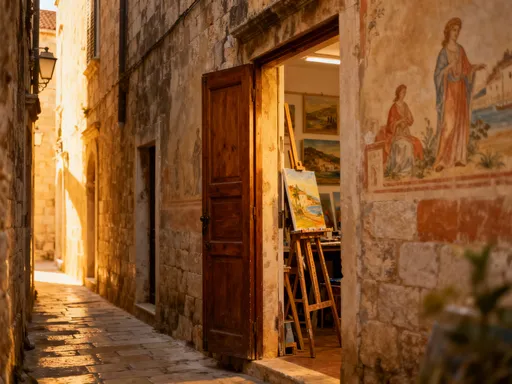
Madrid Unhurried: Where Stone Whispers Stories
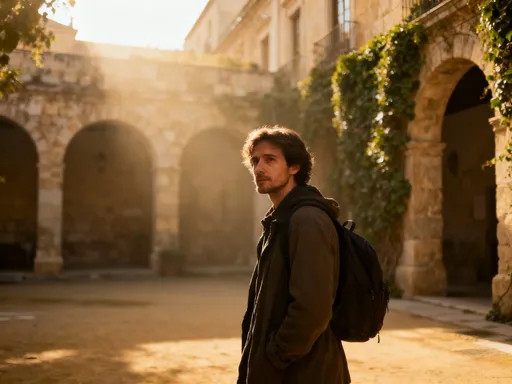
You know that feeling when a city doesn’t just show you its sights but actually talks to you? Madrid did that to me—not in a rush, but slowly, like an old friend flipping through a photo album. I wandered without an agenda, letting the architecture guide my steps. From grand palaces to quiet courtyards, every building felt like a chapter in a living novel. This is slow travel at its finest—where details matter more than checklists. In a world that glorifies speed, Madrid offers a quiet rebellion: the invitation to pause, observe, and listen. The city’s stones, worn by centuries of footsteps, seem to murmur stories to those willing to stay a while. Here, beauty isn’t just seen; it’s absorbed.
The Rhythm of Slow Travel in a Bustling Capital
Madrid is often described as vibrant, energetic, and fast-paced—a city that pulses with the rhythm of tapas, flamenco, and late-night conversation. Tourists frequently arrive with packed itineraries, ticking off museums, markets, and monuments in a single day. Yet beneath this surface energy lies a quieter, more enduring truth: Madrid rewards those who move slowly. The practice of slow travel—immersive, intentional, and unhurried—transforms the way one experiences the city. Instead of racing from one landmark to the next, travelers who linger discover subtle textures: the way sunlight hits a cobblestone plaza at dawn, the laughter spilling from a neighborhood bar, the scent of churros drifting through a quiet alley.
Choosing slowness in Madrid is not a rejection of its dynamism, but a deeper engagement with it. When visitors allow themselves to sit in a café for an hour with just a coffee and a notebook, they begin to notice patterns. Shopkeepers greet regulars by name. Elderly couples take their evening paseo along the same route for decades. Children kick a ball in the same square where their parents once played. These rhythms are invisible to the hurried observer. But for those who stay, the city reveals its heartbeat. This kind of travel fosters emotional connection, turning a visit into a memory that lingers long after the journey ends.
Moreover, slow travel encourages meaningful interactions. A brief conversation with a bookseller in La Latina might lead to a recommendation for a hidden courtyard garden. A question asked at a local bakery could result in an invitation to a family celebration. These moments are not part of any guidebook, yet they often become the most cherished parts of a trip. By embracing patience, travelers step out of the role of spectator and into that of participant. Madrid, in turn, opens its arms not as a performance for tourists, but as a lived reality shared with respect and curiosity.
Baroque Grandeur: The Royal Palace and Its Silent Drama
At the heart of Madrid stands the Royal Palace, a monumental testament to centuries of monarchy, artistry, and power. With over three thousand rooms, sweeping staircases, and façades adorned with intricate carvings, the palace could easily be consumed in a hurried tour. But its true majesty unfolds only to those who walk its halls with deliberate attention. The Baroque style, characterized by grandeur, movement, and emotional intensity, is not merely decorative—it is a language of authority and divine right. Every dome, every gilded frame, every frescoed ceiling speaks of an era when architecture was meant to awe and inspire obedience.
Walking slowly through the throne room, one begins to notice more than just opulence. The proportions of the space, the play of light through tall windows, the texture of silk wall coverings—all contribute to an atmosphere of solemn dignity. The throne itself, though central, is not the only story here. The surrounding paintings, the craftsmanship of the wood inlays, the symmetry of the chandeliers—each element reflects a meticulous vision. Pausing to study the frescoes above reveals mythological scenes that once conveyed moral lessons to courtiers. These details are lost in a rushed visit, where the eye skims surfaces without sinking into meaning.
The palace also bears the imprint of both Habsburg and Bourbon rule, layers of history embedded in its walls. The Habsburgs favored austere strength, while the Bourbons introduced French elegance and Rococo flourishes. A slow observer can trace this evolution from room to room, noticing shifts in color, scale, and ornamentation. Even the armory, often seen as a mere collection of weapons, tells a story of craftsmanship and warfare through the ages. The swords, armor, and ceremonial pieces are not just relics—they are artifacts of identity, protection, and legacy. When viewed with time and care, the Royal Palace becomes less a museum and more a narrative in stone, paint, and gold.
Neoclassical Calm: The Prado and the Art of Stillness
Just a short walk from the bustling Paseo del Prado stands one of the world’s most revered art institutions—the Museo del Prado. While many come for the masterpieces of Goya, Velázquez, and El Greco, fewer pause to appreciate the building itself. Designed in the late 18th century under the influence of Enlightenment ideals, the Prado’s architecture embodies clarity, balance, and rational order. Its clean lines, symmetrical façade, and harmonious proportions reflect a belief in reason and human dignity—principles that also underlie the art it houses.
Entering the museum slowly, one is struck not by noise, but by silence. The wide corridors, high ceilings, and soft natural light create an atmosphere of contemplation. Unlike modern museums with flashy installations and digital distractions, the Prado invites stillness. The architecture does not compete with the art; it supports it. Each gallery is designed to guide the eye gently from one painting to the next, allowing space for reflection. This is slow viewing at its most profound—where seeing becomes understanding.
Consider Velázquez’s Las Meninas, perhaps the museum’s most famous work. To stand before it for only a few minutes is to see a portrait. But to linger—to study the positioning of figures, the play of light, the mirror in the background—is to enter a complex meditation on perception, power, and reality. The room itself enhances this experience. Its neutral tones, absence of clutter, and measured acoustics allow the mind to focus. The architecture becomes a frame not just for paintings, but for thought. In a world of visual overload, the Prado offers a rare gift: the permission to look deeply.
Moreover, the museum’s layout encourages wandering without urgency. Wings extend like quiet corridors of time, each dedicated to a different era or artist. There are benches placed deliberately between galleries—invitations to rest, to absorb, to return. Visitors who take these pauses often find their experience transformed. A painting seen again after a moment of rest reveals new details. A color once overlooked now stands out. This is the power of architectural intention: it shapes not just how we move, but how we perceive.
Urban Layers: Walking the Historic Center with Purpose
To walk through Madrid’s historic center is to move through time. From Plaza Mayor to Puerta del Sol, the city’s streets are a palimpsest of styles, each era leaving its mark on the next. The Plaza Mayor itself, rebuilt in the 18th century after multiple fires, stands as a masterpiece of Spanish Baroque urban design. Its symmetrical arcades, uniform balconies, and central statue create a sense of order and community. Yet look closer, and you’ll spot remnants of earlier structures—the foundations of a medieval market, the outline of a long-gone church wall embedded in newer masonry.
As you move toward Puerta del Sol, the architectural language shifts. Here, 19th-century ironwork balconies perch above street-level shops with Art Deco lettering. A Mudéjar-style doorway, with its intricate geometric tilework, appears unexpectedly beside a modern bank. These juxtapositions are not mistakes—they are the natural result of a city that has grown, not been rebuilt from scratch. Madrid’s charm lies in its layering, its refusal to erase the past in favor of the new. Each building, each corner, holds a clue to what came before.
The joy of slow walking is in the discovery of these subtle details. A carved keystone above a shop door might depict a forgotten saint. A weathered plaque marks the birthplace of a poet long out of fashion. A section of wall, rough and uneven, reveals that it was once part of a convent garden. These are not highlighted in guidebooks, but they are the soul of the city. They speak of daily life, of generations passing through, of continuity amidst change. When travelers slow down, they begin to read the city like a book—each block a paragraph, each plaza a chapter.
This kind of exploration fosters a deeper appreciation for urban resilience. Madrid has endured wars, political shifts, and economic upheavals, yet its streets remain alive. The architecture, far from being frozen in time, continues to adapt. Old buildings become cafés, workshops, homes. Nothing is discarded; everything is repurposed. This is sustainability long before the term existed. To walk with purpose is to witness this quiet endurance—and to feel a part of it.
Modernist Secrets: Gaudí’s Footprint and Lesser-Known Gems
While Barcelona is rightly celebrated for its Modernisme, Madrid holds its own quiet collection of early 20th-century architectural innovation. Though Antoni Gaudí himself left only minor traces in the capital, his spirit lingers in buildings that embrace organic forms, rich ornamentation, and artistic craftsmanship. These structures, often tucked into residential neighborhoods, are easily missed by those following standard tourist routes. Yet for the attentive walker, they offer moments of wonder—like finding a hidden poem in a familiar book.
In the Salamanca and Chamberí districts, one can discover townhouses with undulating stonework, stained glass transoms, and wrought-iron railings shaped like vines. These are not grand monuments, but homes—elevated by artistry into something extraordinary. The use of color, light, and natural motifs reflects the Modernist belief that beauty should be part of everyday life. A simple doorway might be framed by floral mosaics; a staircase banister twists like a tree branch. These details invite touch, admiration, and pause.
One notable example is the Casa de las Flores, a residential building adorned with ceramic blooms and delicate ironwork. Though not widely known, it exemplifies how Modernist ideals took root in Madrid—not through spectacle, but through subtle integration into the urban fabric. Other buildings, such as those along Calle de Serrano or near the Instituto Cervantes, feature asymmetrical facades, curved windows, and playful tile patterns that break from classical rigidity. They suggest a city open to experimentation, even if quietly.
Exploring these spaces requires no special access or ticket—only curiosity and time. There is a joy in stumbling upon beauty where it’s least expected. A side street reveals a courtyard with a mosaic fountain. A glance upward catches the glow of colored glass in the afternoon sun. These discoveries are not about checking off sites, but about cultivating a mindset of awareness. In a world that often prioritizes the famous and the loud, Madrid’s modernist secrets remind us that wonder often resides in the overlooked.
Green Intervals: Retiro Park and the Architecture of Nature
Amid the stone and steel of the city, El Retiro Park offers a sanctuary of green—a place where nature and architecture coexist in graceful dialogue. Once a royal retreat, the park is now a shared space for contemplation, leisure, and connection. Its pathways wind past lakes, sculptures, and gardens, but it is the built structures within the landscape that create its most poetic moments. The Crystal Palace, perhaps the park’s most iconic feature, rises like a mirage of glass and iron. Designed in the 19th century as a greenhouse for tropical plants, it now serves as an exhibition space, its transparency allowing light and reflection to become part of the art.
Visiting the Crystal Palace slowly—walking around it, sitting across from it, watching how it changes with the time of day—reveals its architectural poetry. At sunrise, the glass glows amber; at dusk, it mirrors the sky. Its delicate iron framework, inspired by industrial innovation, is softened by the surrounding trees. The building does not dominate the landscape; it converses with it. Inside, the interplay of natural light and interior space creates an ever-changing environment. Exhibits here feel different than in traditional museums—they are infused with air, light, and the sense of being outdoors.
Other structures in the park echo this harmony. The rose garden’s pavilions, with their tiled roofs and arched entrances, frame the blooms like living paintings. Fountains, from the grand Fuente de la Alcachofa to smaller basins tucked in groves, blend water, sculpture, and sound into a sensory experience. Benches are placed not just for rest, but for viewing—positioned to catch a glimpse of swans on the lake or sunlight filtering through leaves. Every element is designed to slow the visitor down, to encourage presence.
El Retiro teaches a different kind of architecture—one that values silence, seasonality, and the passage of time. Trees grow, leaves fall, light shifts. The park is never the same twice. To visit repeatedly is to witness this quiet transformation. Families picnic, musicians play, elderly men play chess under the chestnuts—each moment adding to the park’s living story. Here, architecture serves not power or prestige, but peace. It is a reminder that the most meaningful spaces are not always the grandest, but the ones that allow us to breathe.
Local Life in Brick and Tile: Neighborhoods Beyond the Center
To truly know Madrid, one must step beyond the postcard sights and into its neighborhoods. Areas like Malasaña, La Latina, and Chamberí offer a more intimate portrait of the city—one written in modest balconies, tiled entryways, and the daily rituals of residents. These districts are not museums; they are lived-in spaces where architecture serves life, not spectacle. Buildings here are often centuries old, yet they pulse with modern energy. A 19th-century townhouse might house a vinyl record shop on the ground floor and a family apartment above. A former convent now hosts a community theater. The past is not preserved behind glass—it is actively reused.
Walking through these streets, one notices the human scale of the design. Doorways are low, staircases narrow, courtyards small but lush. These spaces were built for proximity, for neighborly interaction. Balconies, often crowded with potted geraniums, serve as extensions of the home—places to sip coffee, chat with passersby, or watch the world go by. The tiles that adorn many entrances—azulejos in blues, whites, and yellows—are not just decorative; they are markers of identity, craftsmanship, and regional pride.
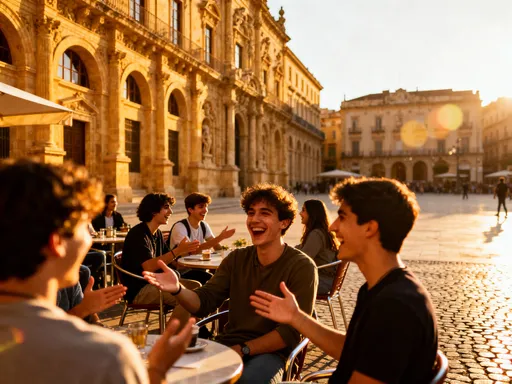
In La Latina, the Sunday market spills into the streets, transforming residential blocks into a celebration of food, music, and community. Cafés set up tables in the plazas, their chairs arranged as if for a family gathering. These are not tourist traps, but real places where Madrileños gather. A slow traveler might strike up a conversation with a vendor, learn about seasonal produce, or be invited to a local festival. These moments of connection are rooted in place, made possible by the intimacy of the neighborhood fabric.
Even the sounds and smells contribute to the experience. The clatter of dishes from a family-run tavern. The scent of garlic and olive oil from an open kitchen window. The murmur of conversation from a balcony above. These sensory details are the invisible architecture of daily life. They cannot be photographed, but they can be felt. In these neighborhoods, Madrid reveals its warmth, its resilience, and its quiet beauty. To visit them slowly is not just to see a city, but to feel at home within it.
Madrid, seen slowly, becomes more than a capital—it becomes a conversation across centuries. Its architecture isn’t just to be seen, but felt, understood, and remembered. By choosing slowness, we don’t just visit; we connect. And in that connection, travel transforms from movement into meaning. The city’s stones, its plazas, its hidden courtyards—they all whisper, if we are willing to listen. In a world that never stops rushing, Madrid offers a rare gift: the chance to be present, to observe, and to belong, even if just for a while.