You Won’t Believe What I Ate in Sukhothai—This Is Real Thai Soul Food
If you think you know Thai food, think again. In Sukhothai, the birthplace of Thai civilization, I discovered a cuisine that’s not about heat or fusion—it’s about history on a plate. From dawn market curries to family-run stalls cooking recipes older than my grandparents, every bite felt like a secret passed down for centuries. This isn’t just eating—it’s tasting the soul of Thailand. Here, food isn’t staged for cameras or adjusted for foreign palates. It unfolds in quiet alleys, riverside homes, and open-air markets where tradition is not preserved behind glass but lived daily. Sukhothai offers a rare truth in modern travel: a destination where flavor and heritage are inseparable, and where every meal feels like an invitation into someone’s family story.
The Heartbeat of Sukhothai: A Culinary Awakening
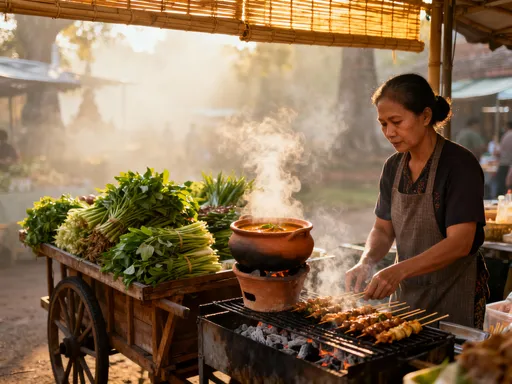
Waking up in Sukhothai feels different. The air carries a quiet hum—birds chirping, temple bells ringing in the distance, and beneath it all, the deep, rhythmic sizzle of charcoal fires and simmering pots. By 5:30 a.m., the streets near the old town begin to stir with movement. Vendors roll out carts, unfold stools, and light their stoves, filling the cool morning with the scent of toasted garlic, lemongrass, and slow-cooked pork broth. This is not the Thailand of glossy food courts or Instagrammable cafes. This is where Thai cuisine still breathes at its natural pace—deliberate, patient, and deeply connected to the land and its people.
What sets Sukhothai apart is that its food culture was never shaped by tourism. While Bangkok caters to global tastes and Chiang Mai blends tradition with trend, Sukhothai remains untouched by culinary compromise. The recipes here were not designed to appeal to outsiders—they were made for farmers returning from rice fields, for monks collecting alms, for families gathering after temple visits. Each dish carries generations of wisdom, refined through necessity and scarcity, elevated by love and repetition. There’s no rush, no shortcuts. A curry paste may be pounded for 20 minutes by hand. A broth may simmer for hours over low flame. This is food made with time, and time is the ingredient most often missing elsewhere.
The city’s historical significance deepens this experience. As the capital of the first Thai kingdom in the 13th century, Sukhothai was a cradle of language, art, and governance. But it was also a place of self-sufficiency, where communities grew their own rice, raised pigs and ducks, and foraged herbs from the surrounding plains. The cuisine reflects that independence—bold in fermentation, rich in umami, balanced in flavor without relying on heavy spice. It’s a cuisine of resilience and resourcefulness, where nothing is wasted and every part of an ingredient finds purpose. To eat here is to taste not just a meal, but a way of life that has endured for over 700 years.
Morning Rituals: The Market as a Kitchen
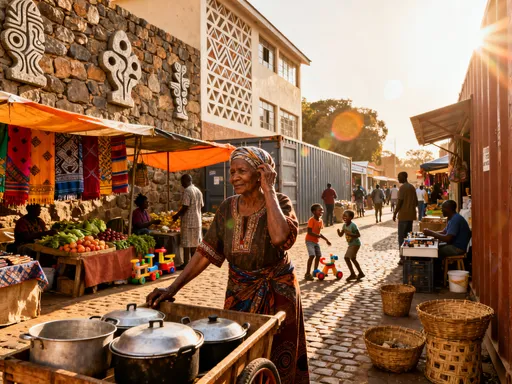
There is no better place to understand Sukhothai’s soul than its morning market. Long before the sun climbs high, the market is already alive with color, movement, and sound. Rows of wooden stalls display pyramids of green papaya, baskets of kaffir lime leaves, and bundles of galangal tied with twine. Vendors in wide-brimmed hats arrange chilies by shade—deep red, bright orange, fiery crimson—while others fold banana leaves into perfect cones for steamed snacks. The air is warm with the aroma of frying shallots and simmering coconut milk, a sensory overture to the day’s first meal.
One of the most striking dishes found here is khanom jeen nam ngiao, a fermented rice noodle dish served in a rich, complex broth made with pork, tomatoes, and dried flowers that give it a deep red hue. Unlike the spicy coconut curries of the south, this soup balances sour, sweet, and savory notes with a subtle heat that builds slowly. It’s often eaten with a side of pickled mustard greens and crispy fried garlic, adding texture and brightness. Locals sit on plastic stools, slurping the noodles with quiet focus, many returning to the same stall for decades.
Another morning favorite is khao tom mat, small sticky rice balls wrapped in banana leaves and filled with banana and sweetened coconut. Steamed until soft and fragrant, they are sold in bundles of five or ten, still warm from the pot. The rice holds its shape but yields gently to the bite, releasing a burst of creamy coconut and caramelized banana. These are not treats made for display—they’re humble, handheld, and deeply comforting, the kind of food grandmothers pack for children going to school or monks receiving morning alms.
Equally beloved is satay sai kai, a northern Thai specialty that surprises many visitors. Unlike the grilled skewers known internationally, this version is a sausage made from seasoned ground pork stuffed into a casing of pork intestine, then steamed with a whole egg inside. When sliced open, the egg yolk blends with the savory meat, creating a rich, custard-like center. It’s served with a tangy dipping sauce made from vinegar, sugar, and bird’s eye chilies. The combination is unexpected but harmonious—earthy, creamy, and just spicy enough to wake the palate. Watching a vendor expertly fill each casing by hand, one realizes this is not fast food. It’s slow craft, passed down through generations.
Cooking with Locals: A Taste of Generosity
One of the most profound experiences in Sukhothai is being welcomed into a local home to cook. I was invited by a family living in a riverside village just outside the historic park, where wooden houses sit on stilts above the water and roosters crow at dawn. The matriarch, Khun Yai, greeted me with a warm smile and immediately led me to the kitchen—a simple open-air space with a clay stove, a stone mortar, and shelves lined with jars of homemade pastes and pickles. There were no written recipes, no measuring cups. Everything was done by feel, by memory, by love.
We began with laab moo ton, a northern-style minced pork salad that differs from the more common Isaan version. Instead of using raw meat, this dish uses pork belly that has been boiled until tender, then crisped over charcoal until golden and crunchy. The meat is finely chopped and mixed with roasted rice powder, fresh herbs, lime juice, and a touch of fish sauce. What makes it unique is the balance—it’s not overwhelmingly spicy, nor is it sour. It’s earthy, nutty, and deeply satisfying, meant to be eaten with sticky rice and fresh vegetables like cucumber and cabbage.
As we pounded the herbs with a wooden pestle, Khun Yai shared stories of her childhood—how her mother taught her to recognize the right moment when the pork skin crackled perfectly, how festivals revolved around food, and how every family had their own variation of laab. She emphasized that cooking was not just about feeding people, but about showing care. “When I make this for my children,” she said, “I am giving them my memory.” Her daughter, who had returned from Bangkok for the weekend, nodded in agreement. “No restaurant here tastes like home,” she said. “Because no one else cooks with the same heart.”
The second dish we prepared was gaeng tai pla, a fermented fish curry known for its intense, pungent flavor. Made with a strong-smelling fermented fish paste, this curry is not for the faint of heart. But in Sukhothai, it’s cherished as a taste of authenticity. We simmered the paste with coconut milk, adding chunks of bamboo shoot, green papaya, and Thai eggplant. The aroma was strong at first—earthy and oceanic—but as it cooked, it mellowed into a complex, umami-rich sauce. Khun Yai explained that the dish was once a way to preserve protein in the days before refrigeration, and that every family had their own ratio of paste to coconut milk. “Too much, and it overwhelms,” she said. “Too little, and it’s not real.”
Hidden Stalls & Off-the-Beaten-Path Bites
While the Historic Park draws visitors with its ancient temples and lotus ponds, the real culinary treasures of Sukhothai are found in quiet corners—near canal bridges, behind neighborhood shrines, or tucked between laundry lines and bicycle repair shops. These are places with no signs, no menus, and certainly no Wi-Fi. But they are where locals line up every morning, often before sunrise, for a taste of something irreplaceable.
One such spot is a decades-old noodle stall run by an elderly couple near Wat Mahathat. They serve kuay teow sen lon, a pork-based noodle soup that includes blood cubes and offal—ingredients that might deter some travelers but are deeply valued here for their richness and texture. The broth is dark, clear, and deeply aromatic, simmered overnight with pork bones, star anise, and ginger. The blood cubes are firm but melt in the mouth, adding a mineral depth to the soup. It’s served with a side of fresh herbs, sliced banana blossom, and a wedge of lime. There are no plastic chairs, only a few wooden benches. Yet by 7 a.m., the place is full—construction workers, shopkeepers, and elderly neighbors all sharing the same humble meal.
Another hidden gem is a woman who sets up a small cart every afternoon near a canal, selling khao kan chin, steamed rice wrapped in banana leaves with fermented pork sausage and a touch of turmeric. The rice turns a soft yellow, and the sausage infuses it with a tangy, smoky flavor. She doesn’t speak much English, but she always smiles and hands me an extra piece when I visit. There’s no price list—just a jar for donations. This is food not as commerce, but as community.
What unites these places is authenticity. Presentation is secondary. Hygiene is maintained, but not in the sterile way of modern restaurants. Here, food is judged solely by taste, and reputation is built over decades, not viral posts. A vendor doesn’t need a sign because everyone in the neighborhood knows where to find her. This is the opposite of performative cuisine. It’s food that exists because it’s needed, loved, and passed on—not because it’s profitable or trendy.
The Flavors That Define Sukhothai
Sukhothai’s cuisine stands apart from other regions of Thailand not because it’s spicier or richer, but because of its balance and depth. While Bangkok leans into bold chili heat and southern Thailand embraces coconut intensity, Sukhothai favors subtlety. The dominant notes are sourness from tamarind or green mango, fermented umami from pla ra or nam pu (fermented crab), and warmth from fresh turmeric and galangal. Spice is present but restrained—used to enhance, not dominate.
This flavor profile is shaped by geography. Sukhothai sits in a fertile basin fed by rivers and seasonal rains, ideal for growing rice, vegetables, and herbs. The abundance means there’s no need to mask flavors with excessive salt or sugar. Instead, ingredients are allowed to speak for themselves. Mai dang, a local sour apple, is often used in soups and salads, adding a bright, juicy tartness. Wild turmeric, with its deep orange hue and earthy aroma, is a staple in curries and rice dishes. Even the water here has a softness that affects how rice cooks and how broths develop.
Fermentation plays a crucial role. In a climate where refrigeration was once unavailable, preserving food through fermentation was essential. Today, it’s a source of pride. Pla ra, made from fermented fish and salt, is used sparingly but powerfully—just a spoonful can transform a salad or curry. It’s not for everyone at first, but those who grow up with it crave it deeply. One local told me, “When I go to Bangkok, I miss the taste of home. It’s not that the food is bad—it’s that it has no memory.”
This connection between flavor and identity is profound. In a country rapidly modernizing, Sukhothai’s cuisine remains a living archive. The taste of fermented fish, sour apples, and hand-pounded curry paste is not just about nutrition—it’s about continuity. It’s how grandmothers teach grandchildren, how communities celebrate, how history is preserved on a plate.
Beyond the Plate: Food as Culture
In Sukhothai, eating is never just about filling the stomach. It’s a social act, a ritual, a form of storytelling. Meals are shared from common dishes, often served on low tables with floor cushions—a tradition known as khan tok. This style of dining dates back to the royal courts of old Siam, where guests would sit in a circle and enjoy a variety of small dishes served on a single tray. Today, it’s still practiced in homes and during festivals, not as a performance for tourists, but as a way of bringing people together.
I was honored to be invited to a khan tok dinner in a family home. The table was low, the cushions soft, and the spread vast—over ten dishes, including grilled fish, fermented pork salad, banana blossom salad, and three types of curry. We ate with our hands, using sticky rice to scoop up flavors. There was no rush, no phones, no distractions. Just conversation, laughter, and the occasional pause to savor a particularly good bite. The host explained that this way of eating teaches humility and connection. “When we sit on the floor,” he said, “we are equal. No one is above or below. We share everything.”
Food here also preserves language. Many dishes have names in Northern Thai dialect, not standard Thai. Elders use these terms naturally, and younger generations learn them at the table. Stories are told about how a certain curry was made during a drought, or how a grandmother once traded a recipe for a chicken. These are not written down—they live in speech, in memory, in the act of cooking and eating together. In this way, cuisine becomes a vessel for cultural survival.
How to Eat Like a Local: Practical Tips for Travelers
For travelers seeking an authentic experience, Sukhothai offers rare rewards—but only if approached with respect and curiosity. The first rule is simple: go early. The best food is served in the morning, often before 8 a.m. Many stalls sell out by midday. Arriving early also means you’ll see the food at its freshest and the vendors at their most welcoming.
Don’t rely on guides or apps. Instead, follow the locals. If you see a small crowd of Thai people standing in line at a cart with no sign, join them. Pointing and smiling goes a long way—most vendors are happy to serve you, even if you don’t speak the language. Carry small bills, as change can be hard to find. And don’t be afraid to eat with your hands when appropriate. In many settings, it’s not just acceptable—it’s expected.
Be mindful of cultural norms. Sit respectfully when eating in a home or temple setting. Remove your shoes if asked. Avoid wasting food—finishing your plate is a sign of appreciation. And never mock or complain about a flavor you don’t like. What tastes strong to you may be deeply comforting to someone else.
Finally, let food guide your exploration. Visit the Historic Park in the morning, then wander the nearby alleys for lunch. Talk to vendors. Ask questions. Take photos only if invited. And remember: you’re not just tasting dishes. You’re participating in a culture that has nourished families for centuries. Every bite is a thread in a larger story—one that began long before you arrived, and will continue long after you leave.
Conclusion
Sukhothai’s food isn’t just a meal—it’s a conversation with history. Each dish carries echoes of kings, farmers, and home cooks who shaped Thai culture long before Instagram existed. To taste Sukhothai is to understand that the most powerful travel experiences don’t come from sightseeing, but from sitting down, sharing a plate, and letting flavor tell the story. The curries, the soups, the steamed snacks—they are not just food. They are heirlooms, passed down with care, eaten with gratitude, and preserved through daily practice. Come for the ruins, stay for the rice. And when you do, remember: you’re not just eating. You’re remembering.