You Won’t Believe These Hidden Art Gems in Dubrovnik
Dubrovnik isn’t just ancient walls and Game of Thrones tours—there’s a whole underground art scene hiding in plain sight. I stumbled upon secret galleries, street murals with stories, and creative spaces tucked in alleyways. These spots aren’t in most guidebooks, but they capture the soul of the city. If you're craving authentic, local culture beyond the cruise crowds, this is your wake-up call. Away from the polished postcard views and crowded Stradun, a quieter rhythm pulses through Dubrovnik’s stone passageways—where artists paint, sculpt, and perform in corners most travelers never think to turn. This is not a city frozen in time, but one quietly reinventing itself, brushstroke by brushstroke.
The Other Side of Dubrovnik: More Than Just City Walls
Dubrovnik is often celebrated for its UNESCO-listed Old Town, a marvel of medieval engineering and Adriatic resilience. The imposing city walls, the bell tower rising above red-tiled roofs, and the grandeur of Sponza Palace are undeniably breathtaking. Yet, for all its historical grandeur, there's a living, breathing cultural heartbeat beneath the surface—one that doesn’t rely on marble facades or tourist itineraries. This is the side of Dubrovnik that reveals itself slowly, to those who wander without a map and listen more than they photograph.
While millions walk the main thoroughfares each year, drawn by the polished charm of the Stradun and the views from Fort Lovrijenac, a parallel world thrives in the margins. Artists, musicians, and independent curators have quietly repurposed forgotten spaces—old storage rooms, disused courtyards, even former workshops—into intimate venues for creative expression. These places aren’t designed for mass consumption; they exist because someone believed art should be part of daily life, not just a souvenir.
What makes these spaces so vital is their role as cultural anchors. In a city where tourism shapes much of the economy, local art becomes a form of resistance—a way to preserve identity, tell untold stories, and invite dialogue. A mural on a back alley wall might reflect on war memory, a gallery in a family home might showcase generational craftsmanship, and a poetry reading in a hidden courtyard might speak to the loneliness of seasonal life. These are not distractions from Dubrovnik’s history—they are continuations of it.
For the thoughtful traveler, especially those seeking meaningful experiences over checklist tourism, these artistic pockets offer a rare chance to connect. They invite slowness, curiosity, and respect. And they remind us that even in a city famed for its preservation, culture is not static—it evolves, adapts, and finds new ways to breathe.
Off-the-Beaten-Path Galleries You’ve Probably Missed
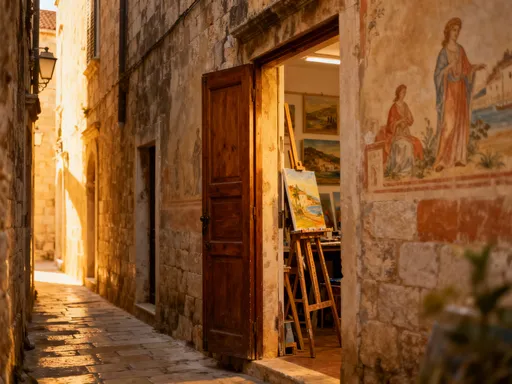
Just steps from the main squares, where souvenir shops and gelato stands dominate, lie small galleries that most visitors pass without noticing. These are not flashy institutions with marble floors and ticket booths, but intimate spaces where art feels personal, urgent, and deeply local. One such example is a compact gallery tucked into a 15th-century stone archway near the Pile Gate. Run by a collective of Dalmatian painters, it rotates exhibitions every six weeks, focusing on themes like maritime heritage, Adriatic light, and the quiet dignity of everyday life.
Another hidden gem is a converted olive oil storage room in the Gradac neighborhood, now used as an artist-run studio and exhibition space. The thick stone walls keep the interior cool even in summer, and the single skylight casts dramatic shadows across large-scale canvases. Here, contemporary artists experiment with mixed media—layering old maps, sea glass, and handwritten letters into textured works that speak to memory and displacement. Because it’s not listed on major travel apps, attendance is low, allowing for quiet contemplation and genuine conversations with the artists when they’re present.
Seasonal pop-up exhibitions also appear in unexpected places—inside a former apothecary shop on Od Sigurate Street, or in the upper floor of a family-owned konoba that doubles as a cultural salon in the shoulder months. These temporary shows often highlight emerging talent or thematic projects, such as a recent exhibit on women’s roles in Dubrovnik’s fishing communities, blending photography, textiles, and oral history.
What sets these galleries apart is not just their location, but their ethos. They are not trying to appeal to mass tastes. Instead, they prioritize authenticity, community, and creative risk. Visitors are encouraged to linger, ask questions, and engage—not just consume. To find them, skip the official brochures. Instead, look for small hand-painted signs, unmarked doors with open cracks, or clusters of locals gathered outside a narrow entrance. Sometimes, the best clue is silence—a sudden hush as you step away from the main drag, and the faint sound of a brush on canvas.
Street Art with a Story: Murals That Speak to the City’s Soul
Dubrovnik’s strict preservation laws mean that overt graffiti is rare, but that doesn’t mean the city lacks street art. On the contrary, carefully placed murals appear in quiet corners, often blending seamlessly with the historic architecture while carrying powerful messages. Unlike the bold, colorful tags seen in larger European cities, Dubrovnik’s street art is subtle—sometimes monochromatic, often poetic, always intentional.
One striking piece, located in the Lapad district just outside the Old Town, depicts a fisherman mending a net, his face partially obscured by a cascade of handwritten names. Created by a local artist known only as Mira, the mural commemorates the fishermen of Gruž Harbor, many of whom have left the trade due to rising costs and tourism pressures. The names woven into the net are real—drawn from ship registries and family records—making it both a tribute and a quiet protest.
Another powerful work lies in a narrow passage near the Dominican Monastery. At first glance, it appears to be a classical fresco—perhaps a restoration—but closer inspection reveals modern symbolism. A woman in traditional Dalmatian dress holds a book open, its pages transforming into seagulls. The piece, titled *Knowledge Takes Flight*, was painted during the pandemic as a message of hope and resilience, symbolizing the return of learning and expression after isolation.
These murals are not meant to be mere backdrops for photos. They are stories in pigment, rooted in local experience. Some reflect on environmental concerns, like a fading blue whale painted on a water cistern near the city walls, its body slowly dissolving into the stone—a metaphor for rising sea levels and coastal erosion. Others honor historical moments, such as a small, understated tribute to the volunteers who protected Dubrovnik’s archives during the 1990s conflict.
Viewing them requires respect. These are not decorations; they are expressions of memory, identity, and sometimes grief. The best approach is to pause, observe, and consider the context. If you take a photo, do so thoughtfully. And if you see the artist nearby, a simple nod or quiet compliment can mean more than a hundred likes online.
Hidden Courtyards Turned Creative Hubs
Dubrovnik’s medieval layout includes dozens of small courtyards, many of which were once private family spaces or service areas for noble households. Over time, some have been restored not as luxury residences, but as cultural oases—places where art, music, and performance can unfold in intimate settings. These courtyards, often enclosed by centuries-old stone walls and shaded by fig trees, create a natural acoustics and atmosphere perfect for creative gatherings.
One such space, tucked behind a nondescript door on Brsalje Street, hosts monthly poetry readings and acoustic concerts during the spring and autumn. Organized by a local NGO called *Kultura na Dlanu* (Culture in the Palm of Your Hand), the events are free and open to the public, though attendance is capped to preserve the ambiance. On a warm evening, you might find a dozen people seated on stone benches, listening to a poet recite verses in Croatian and Italian, the words echoing softly against the walls. There’s no stage, no microphone—just presence and silence.
Another courtyard, near the Church of St. Blaise, has been transformed into a temporary sculpture garden during the summer months. Local artists install site-specific works—driftwood figures, ceramic installations, kinetic pieces made from recycled metal—that interact with the space’s light and shadow. The installations change weekly, and visitors are encouraged to walk slowly, touch when allowed, and reflect on the dialogue between old and new.
Access to these spaces is often tied to cultural events or open-studio days. The Dubrovnik Summer Festival, while known for its grand performances, also includes smaller, off-program activities in these hidden venues. Travelers who plan their visit during late June or early September may catch a jazz trio playing under the stars, or a dance performance inspired by Dalmatian folk traditions. The key is to check local bulletin boards, visit the Tourist Information Center, or follow community-run social media pages that announce these intimate happenings.
What makes these courtyards so special is their sense of intimacy. In a city where large venues cater to thousands, these small spaces offer a different kind of connection—one that feels personal, almost private. They remind us that culture doesn’t always need an audience; sometimes, it just needs a witness.
Meet the Makers: Local Artists Keeping Culture Alive
Behind every mural, gallery, and courtyard performance are individuals who have chosen to stay in Dubrovnik despite the challenges of living in a seasonal city. Among them is Ana Kovač, a ceramicist whose studio sits in a converted wine cellar near the Minčeta Tower. Her work blends traditional Dalmatian patterns with modern forms—plates shaped like waves, vases etched with maritime symbols. “I use clay because it remembers,” she says. “It holds the weight of hands, the heat of fire, the silence of the sea.”
Then there’s Ivan Petrović, a painter who grew up in the Lapad neighborhood and now teaches art to local youth in his spare time. His large-scale works often depict surreal scenes of Dubrovnik floating above the Adriatic, its buildings suspended by threads of light. “Tourism gives us income,” he admits, “but it can also erase us. My art is a way to say: we are still here. We see the city differently.”
Not all artists work in traditional mediums. Luka Marasović runs an experimental sound lab in a repurposed lighthouse keeper’s cottage on the outskirts of the city. Using field recordings from the sea, wind, and old radio broadcasts, he creates immersive audio installations that have been featured in European festivals. “Sound is invisible art,” he explains. “It doesn’t need a frame. It just needs someone willing to listen.”
These artists face real challenges—rising rents, limited funding, and the pressure to produce “sellable” work for tourists. Yet they persist, driven by a deep connection to place and a belief in art’s power to sustain community. Many welcome visitors to their studios by appointment, offering not just a chance to buy art, but to understand it. A conversation with Ana about her glazing techniques, a walk through Ivan’s sketchbooks, or a listening session with Luka’s latest composition—these are the moments that transform a trip into a memory.
Supporting them doesn’t require a big purchase. It can be as simple as sharing their work online, recommending their studio to a fellow traveler, or just spending time in their space with genuine curiosity. When you buy a small ceramic bowl from Ana, you’re not just acquiring an object—you’re carrying a piece of Dubrovnik’s living culture home with you.
How to Find These Spaces Without Getting Lost (or Looking Like a Tourist)
Exploring Dubrovnik’s hidden art scene doesn’t require insider status, but it does benefit from thoughtful planning. The best time to wander is early morning, before the cruise ships dock and the streets fill. Between 7:00 and 9:00 a.m., the city feels different—quieter, more personal. This is when artists are often setting up, and doors are more likely to be open.
Shoulder seasons—April to early June, and September to October—are ideal for deeper cultural engagement. The weather remains pleasant, accommodations are more available, and local events are in full swing without the peak-season crowds. Many galleries and pop-ups operate seasonally, so visiting outside July and August increases your chances of stumbling upon something special.
For real-time updates, check community bulletin boards at cafes like Café Square or Gradska Kavana, where flyers for small exhibitions and performances are often posted. The Tourist Information Center on Poljana Ruđera Boškovića also maintains a list of cultural events, including lesser-known ones. While major apps like Google Maps may not list every hidden gallery, platforms like Eventbrite or local Facebook groups such as *Dubrovnik Art Scene* often share last-minute openings and artist meetups.
When asking for directions, a polite approach goes a long way. Try phrases like “I’m looking for small art spaces—do you know any local galleries?” or “Is there a place nearby where artists gather?” Locals are often proud of their city’s creative side and happy to point you in the right direction—if you show genuine interest.
As for etiquette, remember that these are not theme parks. Speak softly in galleries, ask before photographing artwork, and never touch installations unless invited. If an artist is present, introduce yourself, ask about their work, and listen more than you speak. And when in doubt, follow the golden rule: treat the space as you would someone’s home.
To make a full day of it, pair your art hunt with quiet moments—coffee at a seaside bench in Lapad, a slow walk along the city walls at sunset, or a simple lunch at a family-run konoba. Let the rhythm of discovery guide you, not a checklist.
Why This Side of Dubrovnik Matters—And How to Experience It Right
In an age of fast travel and curated feeds, Dubrovnik’s hidden art scene offers something rare: authenticity. These spaces are not designed for virality. They exist because someone cared enough to create, to preserve, to share. They remind us that every city has layers, and that the most meaningful experiences often lie just beyond the obvious.
Choosing to explore this side of Dubrovnik is a form of slow travel—a commitment to depth over speed, connection over consumption. It means trading a selfie in front of a landmark for a conversation with an artist, or swapping a souvenir keychain for a hand-thrown ceramic cup. It’s not about rejecting the famous sites, but about balancing them with moments of quiet discovery.
Supporting these artists and spaces also has real impact. Every visit, every purchase, every shared story helps sustain Dubrovnik’s cultural fabric. It ensures that the city remains not just a monument, but a living community. In a place where tourism can sometimes feel overwhelming, these creative pockets are acts of resilience—proof that local voices still have room to breathe.
So the next time you plan a trip to Dubrovnik, go beyond the walls—literally and figuratively. Let curiosity be your guide. Turn down the alley with no sign, pause before the mural with no plaque, and step into the courtyard where music drifts through an open door. Don’t just see the city—feel it. Through color, texture, silence, and the quiet courage of those who create in its shadows, Dubrovnik reveals its truest self. And that, more than any postcard, is worth remembering.